
Redshift Sports Mousetrap Review for Cycling Travelers (2026) The Sound...
Read More
Local Emergencies
Emergency Contact Numbers
Always keep these numbers accessible, as they are your lifeline in case of any emergency in Wangdue Phodrang:
- Police: 113
- Ambulance/Medical Emergency: 112
- Fire Department: 110
- Disaster Communication Helpline: 999
- Wangdue Dzongkhag COVID-19 Hotlines: 1196, 1197
- Wangdue Hospital Medicine Refill: 1172
- Wangdue Hospital Mother & Child Services: 1173
- Wangdue Hospital General Medical Services: 1174
- National Grievance Redressal Help Desk: 1023
- Financial Services: 1255
- Wangdue Phodrang Dzongkhag Administration (General): 02-481408 / 02-481686
- Fax: 02-481380
Tip: Program these numbers into your phone before your trip. The general numbers (112, 113, 110, 999) are valid nationwide, including Wangdue Phodrang. For local administrative or logistical emergencies, the Dzongkhag Administration can assist.
Foreign-Friendly Hospitals in Wangdue Phodrang and Nearby Areas
Wangdue Phodrang Hospital
- Address: Wangdue Phodrang, Bhutan
- Phone: 02-481408 / 02-481686
- Fax: 02-481380
- Services: Primary care, emergency services, some specialist consultations, preventive health, and integration of modern and traditional medicine.
- Foreign-Friendliness: English is widely spoken among staff, and the hospital is accustomed to serving both locals and foreign visitors.
Nearby Referral Hospitals
- Jigme Dorji Wangchuck National Referral Hospital (JDWNRH), Thimphu
- Address: Thimphu, Bhutan
- Phone: +975 2 322 602 / +975 2 328 999
- Website: jdwnrh.gov.bt
- Services: Tertiary care, 24/7 emergency, surgery, advanced diagnostics, international patient services.
- Wangdicholing Hospital, Bumthang
- Location: Bumthang, Bhutan
- Services: Modern and traditional medicine, inpatient and outpatient care, English-speaking staff.
- Central Regional Referral Hospital, Gelephu
- Location: Gelephu, Bhutan
- Services: Specialist consultations, advanced diagnostics, telehealth.
Consular Assistance
For US Citizens
- There is no US Embassy or Consulate in Bhutan. All consular services are provided by the US Embassy in New Delhi, India.
US Embassy New Delhi
- Website: US Embassy New Delhi – Bhutan Affairs
- Address: Shantipath, Chanakyapuri, New Delhi – 110021, India
- Phone: +(91) (11) 2419-8000 (24/7 for emergencies)
- Email: acsnd@state.gov
Tip: Enroll in the Smart Traveler Enrollment Program (STEP) before your trip for safety updates and easier assistance. In emergencies, you may need to travel to India for full consular support.
For Non-US Citizens
- Most embassies for Bhutan are located in New Delhi, India.
- EU citizens can seek help from any EU member state’s embassy in New Delhi under EU consular protection.
- The Ministry of Foreign Affairs and External Trade, Bhutan provides consular services for official mission members and can assist with document attestation and other administrative matters.
- Contact your country’s embassy in New Delhi for emergencies, legal issues, or document attestation.
For other countries’ embassies, refer to Embassy Finder for a complete list.
Travel Insurance for Cyclists
Comprehensive travel insurance is essential for cycling in Bhutan, especially in remote, high-altitude areas like Wangdue Phodrang. Here are three leading options:
World Nomads
- Website: worldnomads.com
- Coverage: Adventure travel insurance covering medical emergencies, evacuation, trip cancellation, and some gear protection. Be sure to specify all cycling activities when purchasing your policy. Emergency medical evacuation is available, and Bhutan is included in their coverage area.
Velosurance
- Website: velosurance.com
- Coverage: Specialized for cyclists, covering bike theft, damage, and loss (including in transit). International coverage is available, but confirm that Bhutan is included. Does not cover medical emergencies or evacuation, pair with a travel insurance policy for full protection.
Sunday’s Insurance
- Website: sundaysinsurance.com
- Coverage: Comprehensive protection for your bicycle (theft, accidental and malicious damage, in-transit coverage). International coverage is available, but medical emergencies and evacuation are not included.
Emergency Procedures for Cyclists
If you encounter an emergency while cycling in Wangdue Phodrang, follow these steps:
- Move to Safety: Get yourself and your bike off the road, away from traffic or hazards.
- Assess the Situation: Ensure your own safety before assisting others. If a neck or back injury is suspected, do not move the injured person.
- Administer First Aid: Carry a basic first aid kit and know how to use it. Treat minor injuries and stabilize serious ones until help arrives.
- Contact Emergency Services: Use the numbers listed above. If mobile coverage is limited, send someone to the nearest location with coverage or to a local resident for help. Consider carrying a satellite phone or GPS emergency beacon.
- Relay Precise Location: Use GPS or apps like What3Words to provide your exact location to responders.
- Notify Your Guide or Tour Operator: If you are part of a guided tour, inform your guide immediately, they are trained in emergency response and can coordinate with local authorities.
- Evacuation: For serious injuries, your guide can arrange vehicle transport or, in rare cases, helicopter evacuation (ensure your insurance covers this).
- Hospital Transfer: The nearest hospital is Wangdue Phodrang Hospital. For advanced care, you may be transferred to Thimphu or another referral hospital.
- Report Accidents: For serious accidents, report the incident to local authorities and your embassy or consulate if necessary.
Tip: Always let your guide or support vehicle know your route and expected return time. Carry a charged phone, power bank, and local emergency contacts. Consider a personal locator beacon (PLB) for remote areas.
Preventative Measures
To minimize risks and stay safe while cycling in Wangdue Phodrang:
- Acclimatize to Altitude: Spend a few days at altitude before long rides to allow your body to adjust to lower oxygen levels. Watch for symptoms of altitude sickness and descend if they worsen .
- Ride Within Your Ability: Choose routes that match your skill level and avoid technical trails if you are inexperienced.
- Bike and Gear Preparation: Inspect your bike before every ride, check brakes, tires, and gears. Use wider, all-terrain tires for better grip on loose or rocky surfaces.
- Protective Gear: Always wear a helmet, gloves, and consider knee/elbow pads. Wear bright or reflective clothing and use lights in low visibility.
- Hydration and Nutrition: Carry ample water and energy snacks. The dry mountain air and physical exertion increase dehydration risk.
- Navigation and Communication: Carry a map or GPS device. Cell service may be unreliable; ride with a buddy and know the local emergency numbers.
- Weather Preparedness: Check forecasts, dress in layers, and carry rain gear. Avoid riding in storms or heavy rain.
- Trail Etiquette: Stay on marked trails, yield to others, and announce your presence.
- Wildlife and Environmental Awareness: Be alert for wildlife, carry a first aid kit, and respect local customs and sacred sites.
Cultural and Legal Considerations
Understanding Bhutan’s cultural and legal context is crucial, especially in emergencies:
- Respect for Local Customs: Remain calm, polite, and respectful, even under stress. Avoid raising your voice or displaying anger.
- Religious Sensitivities: Bhutan is a Vajrayana Buddhist country. Sacred sites, objects, and rituals are treated with utmost reverence. Remove shoes and hats when entering temples or monasteries, and dress conservatively.
- Protection of Cultural Heritage: Do not remove or damage religious items or antiques. Exporting protected cultural items without authorization is illegal.
- Community and Authority: Bhutanese culture emphasizes collective responsibility. Local communities may assist in emergencies, respect their methods and leadership.
- Legal Compliance: All emergencies, especially those involving injury or property damage, should be reported to local authorities. Foreigners are subject to Bhutanese law and must comply with all regulations.
- Documentation: Always carry identification and relevant permits. Authorities may request documentation in emergencies.
- Language and Communication: English is widely spoken in hospitals and by officials, but some rural areas may require translation or assistance from your guide.
Do I need a Visa to Enter?
Visa Requirements for US Citizens
Key Points
- Visa Required: Yes, US citizens must obtain a visa before traveling to Bhutan.
- No Visa on Arrival: US citizens cannot get a visa on arrival. Pre-approval is mandatory.
- Tour Operator Requirement: All travel must be booked through a licensed Bhutanese tour operator or their international partners. Independent travel is not allowed.
- Visa Validity: Standard tourist visas are valid for up to 30 days, with possible extensions.
Application Process
- Book with a Licensed Tour Operator: Select a Bhutanese tour operator or an authorized international partner. The operator will handle your visa application.
- Submit Required Documents
- Scanned copy of your passport (valid for at least 6 months beyond your entry date)
- Recent passport-size photo
- Flight itinerary
- Proof of travel insurance (including COVID-19 coverage)
- Vaccination record (COVID-19 vaccination may be required; check for latest requirements).
- Pay Fees
- Visa Fee: $40 per person per trip
- Sustainable Development Fee (SDF): $100 per person, per night (as of 2025; children aged 6–12 pay $50/night, under 6 are exempt).
- Visa Clearance Letter: After processing (5–7 business days), you will receive a visa clearance letter. This is required to board your flight and must be presented upon arrival in Bhutan.
- Visa Issuance: The visa is stamped into your passport at Paro International Airport or other designated entry points upon presentation of the clearance letter.
Note: There are no direct flights from the US to Bhutan; you must transit through countries such as India, Nepal, Thailand, Singapore, or Bangladesh. Check if you need a transit visa for these countries.
Visa Requirements for Non-US Citizens
General Policy
- Visa Required: All foreign nationals (except citizens of India, Bangladesh, and the Maldives) must obtain a visa before arrival.
- Application Method: Online application, typically through a licensed Bhutanese tour operator or hotel.
Country-Specific Variations
- India: Indian citizens do not require a visa but must obtain a permit (online or on arrival). SDF is payable at the time of permit application.
- Bangladesh and Maldives: Citizens require a visa, but the process is simplified and similar to the Indian permit process. SDF applies.
- All Other Nationalities: Must apply for a visa online before travel, pay the visa fee and SDF, and receive a visa clearance letter for entry.
Application Process
- Book with a Licensed Tour Operator or Hotel: The operator or hotel will assist with the visa application.
- Submit Required Documents
- Digital copy of valid passport (minimum 6 months validity)
- Recent digital passport photo
- Arrival and departure dates
- Payment details for visa and SDF fees.
- Pay Fees
- Visa Fee: $40 per person per trip
- SDF: $100 per person, per night (concessionary rates for children).
- Visa Processing: Processing time is typically 5–7 business days. You will receive a visa authorization letter upon approval .
- Visa Issuance: Present the authorization letter at the point of entry (usually Paro International Airport) to have your visa stamped into your passport.
Check the Passport Index to see if your passport has visa requirements for this country.
General Visa Application Requirements
- Valid Passport: Must be valid for at least 6 months beyond your intended departure from Bhutan.
- Completed Visa Application Form: Usually handled by your tour operator.
- Passport Photo: Recent, digital or physical as required.
- Confirmed Itinerary: Provided by your tour operator.
- Proof of Payment: For SDF and visa fee.
- Travel Insurance: Including COVID-19 coverage (may be required).
- Vaccination Record: COVID-19 vaccination may be required; check for updates .
Special Permits
- Route Permits: Required for travel outside Thimphu and Paro. Arranged by your tour operator.
- Trekking Permits: Needed for trekking or mountaineering activities.
- Special Area Permits: Required for restricted or sensitive regions.
- Extensions: Apply in Thimphu if you wish to extend your stay or visit additional areas .
Processing Times and Fees
- Processing Time: 5–7 business days after submission of all documents and payment .
- Visa Fee: $40 per person (non-refundable, one-off per trip)
- SDF: $100 per person, per night (as of 2025; discounts for children)
Important Official Links
- Bhutan Immigration Services Portal – Official visa/permit application
- Bhutan Travel (Tourism Council of Bhutan) – Information and list of authorized tour operators
- e-Permit/e-Visa Portal – Online visa application
- List of Licensed Tour Operators – For booking your trip
Cell Phone & Wifi Access
Mobile Network Coverage and Providers
Bhutan has two main mobile network providers: B-Mobile (Bhutan Telecom) and TashiCell. Both offer extensive coverage in urban centers and along major tourist routes, but there are important differences to consider.
Key Points on Coverage
- Urban Centers (Thimphu, Paro, Punakha): Excellent 4G/5G coverage from both providers.
- Popular Cycling Routes (Bumthang, Gangtey, Haa Valley): Good 2G/3G/4G coverage in towns and along main roads; signal may weaken in remote stretches or high mountain passes.
- Remote and Mountainous Areas: Expect only basic 2G/3G coverage or no signal at all, especially on high passes and in isolated valleys.
- Coverage Maps: Real-time, user-sourced coverage maps (e.g., nPerf) are available online and can help you check specific areas before your trip.
- B-Mobile (Bhutan Telecom): Preferred for broader coverage, especially in rural and high-altitude regions.
- TashiCell: Good alternative in urban areas and for those seeking unlimited data options.
Pre-paid SIM Card Options for Tourists (Including eSIMs)
Staying connected as a tourist is straightforward, with both physical SIM cards and eSIMs available.
Physical SIM Cards
- Where to Buy:
- Paro International Airport: Both providers have counters for immediate purchase upon arrival.
- Retail Stores/Kiosks: Available in major towns (Thimphu, Paro) and some convenience stores.
- Through Tour Guides/Hotels: Many tour operators and hotels can assist with SIM purchase and activation.
- Required Documentation: Passport is mandatory for registration and activation.
- Activation: Staff will assist with activation at the point of purchase; test your SIM before leaving the counter.
eSIM Options
- Availability: eSIMs are now available for Bhutan, offering a digital alternative to physical SIMs. These can be purchased and activated online before arrival, provided your device supports eSIM.
- Pricing: eSIMs start at around $9.50 for 1 GB of data, with larger packages available.
- Activation: Instant activation by scanning a QR code after online purchase.
SIM Card Pricing and Packages
- Physical SIMs: Cost between BTN 49–2,499 (USD 0.58–29.50), with most tourists paying BTN 200–500 for a starter pack.
- Data Packages: Start from BTN 150 for small bundles; larger packages are available for heavy users.
- Tourist SIM Validity: Typically valid for 1–3 months, depending on the provider .
- TashiCell Unlimited Data: TashiCell offers unlimited data packages for tourists, which can be useful for heavy users.
WiFi Availability
WiFi access in Bhutan is highly dependent on your location and type of accommodation.
Hotels and Guesthouses
- Urban Centers (Thimphu, Paro, Punakha):
- Most hotels and guesthouses offer WiFi, though speeds can be variable.
- Luxury hotels provide the most reliable and fastest connections.
- Budget and mid-range hotels may restrict WiFi to common areas and experience slow speeds during peak times .
- Rural and Remote Areas:
- WiFi is rare or non-existent in remote villages, trekking lodges, and high mountain passes.
- Some high-end lodges may offer satellite-based internet, but this is not common.
Cafes and Restaurants
- Urban Cafes: Many cafes and restaurants in Thimphu and Paro offer free WiFi, suitable for basic browsing and messaging.
- Rural Cafes: WiFi is uncommon outside major towns; internet cafes are becoming rare as mobile data becomes more prevalent.
Public Spaces
- Public WiFi: Limited to select government buildings, airports (e.g., Paro International Airport), and some tourist information centers.
- Internet Cafes: Still available in some towns as a backup option.
Recent Developments
- Starlink Satellite Internet: As of early 2025, Starlink is available in Bhutan, providing high-speed satellite internet in rural and mountainous regions. This requires advance planning and equipment.
Specific Considerations for Cyclists
Cyclists in Bhutan face unique connectivity challenges due to the country’s geography and infrastructure.
Mobile Coverage on Cycling Routes
- Main Routes: Good coverage in and between major towns (Thimphu, Paro, Punakha, Bumthang, Haa Valley).
- High Passes and Remote Stretches: Expect long stretches with weak or no signal, especially on high passes like Chele La and Dochula.
- Emergency Communication: Always inform your guide or support vehicle of your route. Some tour operators carry satellite phones for emergencies.
Data and Navigation
- Offline Maps: Download offline maps (Google Maps, Maps.me) before your trip, as real-time navigation may not work in areas without coverage.
- Power Backup: Carry portable power banks, as charging opportunities may be limited in remote areas.
WiFi for Cyclists
- Hotels: Plan to use hotel WiFi in towns for major uploads, route planning, or communication.
- On the Road: Do not rely on WiFi during cycling days; mobile data is your best option, but expect gaps in coverage.
Practical Tips
- Test Your SIM: Activate and test your SIM card in town before heading into remote areas.
- Stay Updated: Ask your guide or hotel about the latest coverage updates, as infrastructure is gradually improving.
- Prepare for Offline Periods: Download essential documents, maps, and contacts before heading into areas with uncertain connectivity.
Final Notes
- Best Provider for Cyclists: B-Mobile (Bhutan Telecom) is generally recommended for its broader coverage, especially if you plan to cycle through rural or remote areas.
- Tourist SIMs and eSIMs: Both are available and easy to purchase; eSIMs offer added convenience if your device supports them.
- WiFi: Widely available in urban hotels and some cafes, but unreliable or absent in rural areas, plan accordingly.
Are your Electronics Compatible?
Bhutan’s Electrical System Specifications
- Voltage: 230 V
- Frequency: 50 Hz
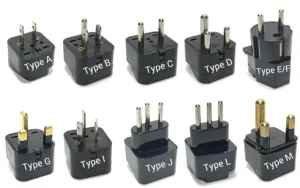
- Outlet Types:
- Type D: Three round pins in a triangular pattern
- Type F: Two round pins with earth clips (Schuko)
- Type G: Three rectangular pins (UK style)
Device Compatibility and Power Requirements
Common Cycling Traveler Devices
- Smartphones (navigation, communication, photography)
- GPS devices (cycling computers, handheld GPS)
- Rechargeable bike lights
- Action cameras (e.g., GoPro)
- Power banks
- Laptops/tablets
- E-bike batteries
- Bluetooth accessories (headphones, speakers)
Voltage and Frequency Compatibility
- Most modern electronic devices (phones, cameras, GPS, power banks, laptops) are designed for a wide input voltage range (100–240 V, 50/60 Hz). These are fully compatible with Bhutan’s 230 V, 50 Hz system and only require a plug adapter.
- E-bike chargers: Some are single-voltage (110 V or 220–240 V only). Always check your charger’s label. If it is not compatible with 230 V, you will need a voltage converter.
Plug Compatibility
- Plug shape is the main issue. Devices from North America, Australia, and some parts of Asia will require a plug adapter for Bhutan’s D, F, or G sockets.
- Universal travel adapters are highly recommended, as they can accommodate all the plug types found in Bhutan.
Necessary Adapters and Converters
- Plug Adapters: Bring a universal travel adapter that covers Types D, F, and G. This will ensure compatibility with all outlets you may encounter in Bhutan.
- Voltage Converters/Transformers:
- If your device is only rated for 100–120 V (common in North America and Japan), you will need a step-down voltage converter to safely use it with Bhutan’s 230 V supply.
- Dual-voltage devices (marked “100–240V, 50/60Hz”) only require a plug adapter, not a voltage converter.
- Surge Protectors: For sensitive electronics (laptops, cameras), a surge protector is recommended due to occasional power fluctuations.
Power Solutions Specific to Cycling
Cycling in Bhutan often means long stretches between towns and limited access to reliable electricity, especially in rural or high-altitude areas. Here’s how to stay powered up:
Power Banks
- High-capacity power banks (10,000–20,000 mAh or more) are essential for charging smartphones, GPS units, and cameras during multi-day rides .
- Solar power banks can be a valuable backup, especially for extended trips in remote areas.
Solar Chargers
- Portable solar panels (10–20W) can be attached to panniers or backpacks, allowing you to charge devices while riding or during rest stops. High-altitude regions in Bhutan receive strong sunlight on clear days.
Dynamo Hubs
- Dynamo-powered USB chargers generate electricity as you ride, providing a reliable, weather-independent source of power for small devices or topping up power banks.
E-bike Battery Management
- Spare batteries are advisable for e-bike users, as charging infrastructure is limited outside urban centers.
- Portable battery packs compatible with your e-bike can extend your range between charges.
Charging Availability
- Urban Centers (Thimphu, Paro, Phuentsholing): Reliable electricity and standard charging options in hotels, guesthouses, and some restaurants.
- Rural Areas: Access to electricity can be sporadic or unavailable. Some villages may have micro-hydro or solar mini-grids, but power is not guaranteed. Always charge all devices whenever you have access to power.
Recommendations for Cycling Travelers in Bhutan
- Bring a universal travel adapter covering Types D, F, and G.
- Check your device’s voltage rating before travel. Most modern devices are dual voltage, but always confirm.
- Carry high-capacity power banks (at least 10,000–20,000 mAh) for charging on the go.
- Consider a portable solar charger or a dynamo hub for extended trips in remote areas.
- Charge all devices at every opportunity, especially in urban centers and guesthouses.
- Bring extra charging cables and a multi-port USB charger to maximize limited outlet access.
- Practice power management discipline: Limit non-essential device use to conserve battery life for navigation and emergency communication.
- E-bike users: Double-check your charger’s voltage range and bring a voltage converter if needed. Carry a spare battery if possible.
- Be prepared for power outages and intermittent supply, especially in rural areas.
- If traveling in a group, coordinate charging schedules and share power banks or adapters to ensure everyone stays connected.
Currency Exchange
Currency Overview: The Bhutanese Ngultrum
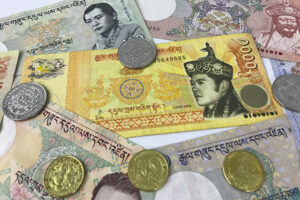
The official currency of Bhutan is the **ngultrum (**symbol: Nu., ISO code: BTN), which is pegged 1:1 to the Indian rupee (INR). The ngultrum is subdivided into 100 chetrum (Ch.). Indian rupees (except for ₹500, ₹1,000, and ₹2,000 notes) are also widely accepted in Bhutan.
Denominations
- Banknotes: Nu. 1, 5, 10, 20, 50, 100, 500, 1,000
- Coins: Ch. 1, 5, 10, 20, 25, 50; Nu. 1, 2, 3 (rare), 5, 10 (rare)
Banknotes feature vibrant designs depicting Bhutanese kings, dzongs (fortresses), Buddhist symbols, and national emblems. Coins are less commonly used but are available for small transactions.
Currency Exchange Options
1. Airports
- Paro International Airport offers currency exchange services upon arrival.
- Pros: Immediate access to local currency for initial expenses.
- Cons: Exchange rates are less favorable and fees are higher than in town. Use for small amounts only.
2. Banks
- Major banks: Bank of Bhutan, Bhutan National Bank, Druk PNB, T-Bank, Bhutan Development Bank.
- Locations: Branches in all major towns (Thimphu, Paro, Punakha, etc.).
- Pros: Best exchange rates, low fees, secure and reliable.
- Cons: Limited hours (typically 9am–3pm weekdays), closed on weekends and holidays.
- Documentation: Passport required for exchange.
3. Hotels
- Some high-end hotels offer currency exchange, mainly for USD and other major currencies.
- Pros: Convenient if staying overnight.
- Cons: Poorer rates, limited to major currencies, not available in rural guesthouses.
4. ATMs
- Available in all major towns; accept Visa and Mastercard (Amex less common).
- Pros: 24/7 access, convenient for withdrawing local currency.
- Cons: Fees per withdrawal (Nu 150–300), cash limits, may not work with all cards, rare in rural areas.
Best Practices for Currency Exchange
- Exchange at Banks: For the best rates and lowest fees, use banks in major towns. Avoid exchanging large amounts at airports or hotels.
- Withdraw Sufficient Cash in Towns: Before heading into rural or remote areas, ensure you have enough cash, as ATMs and banks may not be available.
- Carry Small Denominations: Useful for small purchases and in areas where change may be hard to find.
- Keep Receipts: You may need them to convert leftover ngultrum back to foreign currency when leaving Bhutan.
- Check ATM Compatibility: Not all ATMs accept all cards. Visa and Mastercard are most widely accepted; bring both if possible.
- Avoid Dynamic Currency Conversion: Always choose to be charged in ngultrum (BTN) at ATMs or merchants to avoid hidden fees.
- Monitor Exchange Rates: Rates can fluctuate. Check at multiple banks or authorized changers if possible.
- Notify Your Bank: Inform your home bank of your travel plans to avoid card blocks.
Safety Considerations for Cycling Travelers
While Bhutan is considered very safe, basic precautions are always recommended:
- Carry Only What You Need: Don’t carry large amounts of cash at once. A few hundred dollars (or equivalent in ngultrum) should suffice for daily expenses.
- Divide and Conceal Cash: Split your cash into several stashes and store them in different places (money belt, pannier, handlebar bag, etc.)
- Use a Money Belt: For cash you need to carry on your person, use a concealed money belt, especially in busier towns or markets.
- Take Valuables with You: Always take your handlebar bag (with cash, passport, and valuables) when leaving your bike, even briefly.
- Avoid Displaying Cash: Prepare small denominations for daily use and keep larger bills hidden.
- Photocopy Important Documents: Keep a laminated copy of your passport in your handlebar bag for identification without exposing your real passport and cash.
Regional Considerations
Urban Centers (Thimphu, Paro, Phuentsholing)
- Best access to banks, ATMs, and currency exchange services.
- ATMs and banks are concentrated here, making it easy to replenish cash supplies.
Rural and Remote Regions (Bumthang, Mongar, Trashigang, high passes)
- Limited or no access to banks, ATMs, or exchange services.
- Cash is king: Most local businesses, guesthouses, and shops do not accept cards or foreign currency.
- Plan ahead: Stock up on cash before leaving urban centers.
Cycling Routes
- Western circuit (Thimphu–Paro–Punakha): Regular access to banks and ATMs.
- Central/Eastern Bhutan: Fewer ATMs and banks; carry enough cash for the entire leg.
- Border towns (Phuentsholing, Samdrup Jongkhar): Good for currency exchange due to cross-border trade.
Recommendations for Cycling Travelers
- Bring Multiple Cards: Carry both Visa and Mastercard, and keep them separate. Have a backup card in case of loss or technical issues
- Carry a Reserve of USD or EUR: These can be exchanged in emergencies, especially in out-of-the-way places.
- Set Up Internet Banking: Monitor your accounts and transfer funds as needed.
- Notify Your Bank: Prevent your cards from being blocked due to “unusual activity.”
- Plan Cash Needs: Especially for remote regions, as ATMs and exchange services may be unavailable.
- Be Discreet: When exchanging money, especially on the street, check rates online, use a calculator, and deal with one person at a time.
- Keep Emergency Cash: Hide a small emergency stash on your person or in your gear.
- Ask Locals or Guides: For the nearest ATM or bank, especially in less-traveled regions.
Food & Water Quality
Food Safety Landscape in Bhutan
Bhutan’s food safety system is robust and evolving, with strong regulatory oversight, regular surveillance, and a focus on public education. The Bhutan Food and Drug Authority (BFDA) and the Bhutan Agriculture and Food Regulatory Authority (BAFRA) are the main agencies responsible for food safety, enforcing mandatory standards for meat, dairy, eggs, fruits, vegetables, and processed foods. These standards are aligned with international guidelines and are regularly updated.
- Common Foodborne Illnesses: Salmonella and Shigella are the most frequently identified pathogens, with outbreaks more common during the hot and wet seasons (June–August). Schools and mass catering events are particularly vulnerable.
- Surveillance: Routine sampling and laboratory testing are conducted, especially for ready-to-eat foods. Recent surveillance found that 12.36% of food samples were non-acceptable due to contamination by indicator organisms, and 8.71% due to pathogenic contamination.
- Public Education: Food handler training and consumer awareness programs are regularly conducted to improve hygiene and reduce risks.
Food Safety in Different Settings
Hotels and Reputable Restaurants
- High Standards: Most hotels and tourist-oriented restaurants maintain good hygiene and food safety standards. Food is generally safe, especially when cooked and served hot.
- Tour Operator Vigilance: Organized tours and hotels are proactive in providing safe food and water to guests.
Street Food and Local Eateries
- Variable Hygiene: Street food and small local eateries can have variable hygiene standards. While many travelers enjoy local food without issue, the risk of foodborne illness is higher in less regulated settings.
- Precautions: Prefer cooked foods and avoid raw or undercooked items. Exercise caution with salads and unpeeled fruits.
Meat Shops and Processing Plants
- Daily Inspections: Meat shops undergo daily inspections, and only those meeting strict standards receive safety clearances. Traceability systems allow consumers to track the origin of meat products.
- Packaging and Storage: Strict packaging standards are enforced to prevent contamination and maintain freshness.
Food Processing Units
- Good Practices: All food businesses must comply with Good Hygienic Practices (GHP) and Good Manufacturing Practices (GMP). Regular surveillance and recall procedures are in place.
Imported Foods
- Inspection and Certification: Imported foods, especially meat and seafood, are inspected and certified before entering Bhutan. Certification from accredited laboratories is required for certain products.
Dairy and Local Produce
- Monitoring: Dairy products are monitored for adulteration, and fruits/vegetables are checked for pesticide residues.
Water Quality and Safety
Tap Water
- Not Safe for Direct Consumption: Tap water in Bhutan is generally not safe to drink without treatment. Only about half of urban water samples and 70% of rural samples meet national microbial safety standards. The main concern is microbial contamination, especially during the monsoon season .
- Boiling and Purification: Boiling tap water is a common and effective practice. In rural or remote areas, use water purification tablets or portable filters.
Bottled Water
- Widely Available: Bottled water is readily available in urban centers, hotels, and restaurants. It is the safest and most convenient option for travelers.
- Limited in Rural Areas: In remote regions, bottled water may be less accessible, so travelers should bring purification devices or tablets.
Regional and Seasonal Variations
- Monsoon Risks: Water quality deteriorates during the monsoon due to runoff and flooding, increasing the risk of waterborne diseases .
- Geographic Disparities: The Eastern region has the lowest compliance with safety standards .
Recent Improvements
- Upgraded Standards: Bhutan endorsed revised Drinking Water Quality Standards in June 2025 and has strengthened governance, surveillance, and infrastructure .
- Ongoing Challenges: Funding gaps and household-level contamination remain issues, especially in urban areas .
Traditional Bhutanese Cuisine & Food Safety
Bhutanese cuisine is fresh, wholesome, and often spicy, with a strong emphasis on local ingredients like red rice, buckwheat, chilies, and cheese. Common dishes include Ema Datshi (chilies and cheese), Phaksha Paa (pork with chilies), and a variety of meat and vegetarian stews
.
- Freshness: Most ingredients are locally sourced and used fresh, supporting good food safety.
- Dried Meats: Some meats are dried for preservation; ensure they are properly stored and handled.
- Dairy: Cheese is often homemade and may be unpasteurized—travelers with sensitive stomachs should exercise caution.
- Spiciness: Bhutanese food is very spicy, which can cause digestive discomfort for some travelers .
Safety Tips & Precautions for Travelers
- Drink only bottled or properly treated water. Use bottled water for drinking and brushing teeth. Avoid ice unless you are sure it’s made from purified water .
- Eat only well-cooked foods. Avoid raw or undercooked meats, seafood, and eggs. Stick to foods that are thoroughly cooked and served hot.
- Fruits and vegetables: Eat only if peeled or cooked. Avoid salads and raw produce unless you are certain they have been washed in safe water .
- Be cautious with street food. Prefer reputable establishments and cooked foods.
- Hand hygiene: Wash hands frequently, especially before eating. Carry hand sanitizer for situations where soap and water are not available .
- Water purification: In rural or remote areas, use water purification tablets, portable filters, or boil water before consumption .
- Avoid ice cubes unless you are certain they are made from purified water.
- Monitor for illness: Traveler’s diarrhea is possible; follow the above precautions to reduce risk.
- Extra caution during monsoon: Waterborne disease risk is highest during the rainy season.
What do the US Dept of State, US Embassy, and CDC say?
Check out the latest Travel Advisory to Bhutan from the US Dept of State. Contacts from all US Embassies in Bhutan are listed on the website. Use the Smart Traveler Enrollment Program (STEP) to inform them of your travels.
Read the Travel Health Notices & suggested vaccinations from the CDC
For the latest updates and resources, visit the U.S. Embassy in Bhutan’s official website: U.S. Embassy & Consulates in Bhutan
Supplement Your Health / Travel Insurance
General Insurance Requirements & Recommendations
- Mandatory Status: As of April 2024, travel insurance is not required for a Bhutan visa. However, it is strongly recommended by Bhutanese authorities for all visitors due to the country’s remote terrain and limited medical facilities.
- Recommended Coverage Includes:
- Medical emergencies and hospitalization
- Emergency evacuation (including helicopter rescue)
- Trip cancellation/interruption
- Loss/theft of personal belongings
- Adventure activities (cycling, trekking, etc.)
- No Official Minimums or Provider List: You may use any reputable international insurer, but ensure your policy covers Bhutan and your planned activities.
- Consult Your Tour Operator: Some operators may require proof of insurance for adventure activities.
Specialized Insurance Options for Cyclists
Velosurance (for Cyclists & Bicycles)
- What It Covers:
- Theft (home/away), accidental damage, loss in transit, spare parts, apparel, rental reimbursement, event fee reimbursement
- Optional: liability, medical payments, uninsured motorist, worldwide coverage (including Bhutan), racing coverage, roadside assistance
- Who Can Buy: US residents only. Worldwide coverage must be selected as an add-on
- How to Buy: Get a quote and purchase online in minutes
- URL: velosurance.com
Sunday’s Insurance (for Your Bicycle)
- What It Covers: Theft, accidental damage, vandalism, emergency medical expenses, accessories, wheelsets, worldwide coverage (up to 90 days), racing/event coverage, event entry fee reimbursement, rental reimbursement
- Who Can Buy: Available in the USA, UK, and Australia; worldwide coverage must be activated before travel
- How to Buy: Online quote and purchase; add worldwide coverage for Bhutan
- URL: sundaysinsurance.com
World Nomad Insurance (for Travel & Adventure)
- What It Covers: Medical emergencies, evacuation, trip cancellation, baggage, personal liability, and 150+ adventure activities (including cycling and mountain biking up to 6,000m)
- Who Can Buy: Most nationalities; policies available worldwide
- How to Buy: Online quote and purchase. Select all planned activities and destinations (including Bhutan) at purchase
- URL: worldnomads.com
Other International Insurance Options for Cyclists
AXA Travel Insurance
- Global coverage, adventure sports add-ons
- Website: axatravelinsurance.com
Allianz Global Assistance
- Customizable plans, adventure sports, strong global support
- Website: https://www.allianztravelinsurance.com/
IMG Global
- International health/travel insurance, adventure sports rider
- https://www.imglobal.com/
Travelex Insurance:
- Adventure sports add-ons, comprehensive coverage
- Website: travelexinsurance.com
SportsCover Direct:
- Cycling-specific, equipment, trip cancellation
- Website: sportscoverdirect.com
SafetyWing:
- Flexible global health/travel insurance, cycling included
- Website: safetywing.com
Local Bhutanese Insurance Options
Bhutan Insurance Limited (BIL)
- Product: Global Travel Insurance (for tourists, including cycling travelers)
- Coverage: Medical emergencies, accidents, travel risks, cashless support, worldwide assistance
- How to Buy: Online, through tour operators, or at port of entry (for some regional travelers)
- URL: bil.bt
Royal Insurance Corporation of Bhutan (RICB)
- Product: Travel Insurance (for tourists, including adventure activities)
- Coverage: Accidental injuries, medical emergencies, travel incidents
- How to Buy: Online or through tour operators
- URL: ricb.bt
Key Insurance Considerations for Cycling Travelers in Bhutan
- Medical & Evacuation Coverage: Essential due to high altitude, remote terrain, and limited local medical facilities. Ensure helicopter evacuation is included.
- Adventure Activity Coverage: Confirm your policy covers cycling, mountain biking, and high-altitude activities (some policies have altitude limits).
- Bicycle Theft/Damage: Specialized policies (Velosurance, Sunday’s) offer full-value coverage for your bike and gear, including loss in transit.
- Personal Liability: Important if you injure someone or damage property while cycling.
- Trip Cancellation/Interruption: Protects non-refundable costs if your trip is disrupted.
- Pre-existing Conditions: Check if your policy covers or excludes these.
- Support from Tour Operators: Many Bhutanese tour operators can arrange local insurance or advise on requirements.
How to Stay Safe
Road Safety & Traffic Conditions
- Traffic Volume: Generally light, especially outside Thimphu and Paro. Urban centers can have moderate congestion during peak hours.
- Road Types:
- Main highways are paved but narrow, with frequent sharp curves and steep gradients.
- Rural and mountain roads are often unpaved, rough, and can be muddy or slippery, especially during monsoon.
- Road Sharing: Cyclists share roads with vehicles, pedestrians, and livestock. Encounters with free-roaming cattle are common in rural areas.
- Driver Behavior: Bhutanese drivers are typically patient and courteous, but always remain vigilant, especially on blind corners and narrow stretches.
- Traffic Laws:
- Ride on the left.
- Obey speed limits (30 km/h in towns, 50 km/h outside).
- No dedicated cycling lanes, be highly visible and ride defensively.
- Hazards:
- Watch for livestock, sharp curves, landslides (monsoon), and icy patches (winter).
- Avoid cycling at night due to poor lighting and increased accident risk.
Safety Equipment & Bicycle Maintenance
Mandatory/Recommended Gear:
- Helmet: Strongly recommended and often required by tour operators.
- Front/Rear Lights & Reflectors: Essential for low-light, fog, and tunnels.
- High-Visibility/Reflective Clothing: Increases safety on winding roads.
- Gloves, Sunglasses, and Weather-Appropriate Clothing: For protection and comfort.
- First Aid Kit & Hydration Pack: For emergencies and long rides.
Bicycle Preparation:
- Use a mountain or hybrid bike with robust tires and good brakes (preferably disc brakes).
- Wide-range gearing for steep climbs.
- Puncture-resistant tires and spare tubes.
Maintenance:
- Service your bike before arrival; daily checks on brakes, tires, and chain.
- Carry a comprehensive tool kit and spare parts (tubes, brake pads, cables).
- In remote areas, be self-sufficient, bike shops are limited to Thimphu and Paro.
Health & Medical Precautions
- Altitude Sickness:
- Many routes exceed 2,500–3,000 meters. Acclimatize gradually, hydrate well, and recognize symptoms (headache, nausea, dizziness).
- Descend immediately if symptoms worsen.
- Vaccinations: Routine vaccines plus Hepatitis A/B, Typhoid, Rabies (if risk of animal contact), and Japanese Encephalitis (for extended rural stays).
- Water & Food Safety: Drink only bottled, boiled, or filtered water. Eat thoroughly cooked food. Avoid raw produce and unpasteurized dairy.
- Medical Facilities:
- Best care is in Thimphu (JDWNRH). Outside major towns, facilities are basic.
- Carry essential medications and a doctor’s letter for prescriptions.
- Emergency Evacuation: Insurance covering medical evacuation is strongly recommended.
Seasonal Considerations
- Best Seasons: Spring (March–May) and Autumn (September–November): Mild, dry, and stable weather.
- Monsoon (June–August): Heavy rain, landslides, and muddy roads, avoid central and eastern regions.
- Winter (December–February): Snow and ice at high passes. Stick to lower valleys and bring insulated clothing.
- Always Check: Local weather and road conditions before setting out.
Cultural Awareness & Local Customs
- Dress Modestly: Cover arms and legs, especially at religious sites.
- Religious Sites:
- Remove shoes and hats. Move clockwise around chortens and temples.
- Photography is often prohibited inside temples, ask your guide.
- Interaction:
- Greet with “Kuzuzangpo la” and a smile.
- Use your right hand or both hands when giving/receiving items.
- Avoid public displays of affection and pointing feet at people or sacred objects.
- Gift-Giving: Do not give gifts directly to children; donate through schools or NGOs.
- Respect Local Traditions: Participate in rituals only if invited; observe quietly at festivals.
Crime Prevention & Personal Safety
- Crime Rate: Bhutan is one of the world’s safest countries; violent crime is extremely rare.
- Petty Crime: Occasional pickpocketing or theft in crowded areas, keep valuables secure and avoid displaying expensive items.
- Scams: Beware of overcharging, fake tour operators, and counterfeit goods. Use licensed agencies and government-accredited shops.
- Accommodation: Stay in approved lodgings; use safes for valuables.
- Emergency Contacts: Police: 113 | Ambulance: 112 | Fire: 110 | Disaster Helpline: 999
Insurance & Legal Considerations
- Insurance: Not mandatory as of April 2024, but strongly recommended: medical, evacuation, liability, and equipment coverage.
- Visa & Permits:
- All foreigners (except Indian, Bangladeshi, Maldivian nationals) need a visa and must pay the Sustainable Development Fee (SDF).
- Additional permits may be required for certain regions.
- Certified Guide: All foreign cyclists must be accompanied by a certified Bhutanese guide at all times.
- Tour Operator: Cycling tours must be arranged through a licensed Bhutanese operator.
- Legal Compliance: Adhere to all traffic laws, permit requirements, and environmental regulations.
- Liability: You are responsible for any injury or damage caused; personal liability insurance is advised.
Practical Safety Tips for Cyclists
- Route Planning: Use reliable navigation apps with offline maps; share your itinerary with your guide and family.
- Communication: Local SIM cards work in towns; consider a satellite phone for remote areas.
- Emergency Supplies: Carry extra food, water, and a power bank.
- Group Travel: Solo cycling is not permitted for foreigners; always travel with your guide and group.
- Wildlife: Encounters are rare but possible, never approach or feed wild animals.
- Checkpoint Protocols: Always carry your permit, visa, and ID. Comply with police or military at checkpoints.
- Daily Routines: Inspect your bike, wear safety gear, hydrate, and finish rides before dusk.
- Environmental Responsibility: Do not litter. Follow Leave No Trace principles.
Essential Apps
Essential Cycling & Navigation Apps
1. Komoot
- Why: Best for planning cycling routes, especially for mountain and gravel biking. Offers detailed elevation profiles and offline maps—crucial for Bhutan’s remote areas.
- Android | iOS
2. Strava
- Why: Tracks your rides, elevation, and performance. Works offline and lets you compare your efforts on Bhutan’s famous climbs.
- Android | iOS
3. Bikemap
- Why: Features user-generated cycling routes in Bhutan, with offline navigation and elevation data.
- Android | iOS
4. MAPS.ME
- Why: Fully offline maps and navigation, including cycling and hiking trails. Indispensable in areas with no mobile signal.
- Android | iOS
5. HERE WeGo
- Why: Reliable offline navigation for driving, cycling, and walking. Good for both city and rural navigation.
- Android | iOS
Weather & Local Conditions
6. Druk Namshey
- Why: Official Bhutanese weather app with real-time updates and flood alerts. Most accurate for Bhutan’s microclimates.
- iOS (No official Android version; use “Bhutan Weather” below for Android)
7. Bhutan Weather
- Why: Real-time weather from Bhutan’s National Centre for Hydrology and Meteorology. Essential for planning rides in diverse climate zones.
- Android | iOS
Communication & Connectivity
8. WhatsApp
- Why: Most widely used messaging app in Bhutan. Works well on low bandwidth and queues messages for later delivery.
- Android | iOS
9. Facebook Messenger Lite
10. Telegram
- Why: Reliable on weak connections, supports group chats, and works well for international travelers.
- Android | iOS
Emergency & Safety
11. eBodyGuard
- Why: SOS alerts, live location sharing, and satellite calling for emergencies—even in areas with no cell service.
- Android | iOS
12. Cairn
- Why: Safety tracking, cell coverage maps, and automatic alerts if you’re overdue. Excellent for solo or remote rides.
- Android | iOS
13. Flare
14. What3Words
- Why: Pinpoint your exact location with a unique three-word address, imporatant for rescue or meeting points in remote areas.
- Android | iOS
Bhutan-Specific & General Travel Apps
15. Tourism Bhutan
- Why: Official app for trip planning, booking, and local information. Centralizes travel logistics and connects you with service providers.
- Android | iOS (replace with actual link when available)
16. Druk Ride
- Why: Local taxi and bus ticket booking, helpful for getting around towns or arranging transport for you and your bike.
- Android
Key Tips
- Download maps and routes before your trip to ensure full offline functionality.
- Prioritize local weather apps (Druk Namshey, Bhutan Weather) for accurate, region-specific forecasts.
- Have at least one emergency/SOS app and a reliable messaging app (WhatsApp or SMS) for safety in remote areas.
- Use Bhutan-specific travel apps for logistics, bookings, and local insights.

Cycle The Myth: Peloponnese, Greece
From$2,600Availability : July 30 - Aug 15, 2025Delhi, Manali to Leh, IndiaExperience the bustling chaos and historic majesty of Delhi’s ancient streets before embarking on one of the world’s most epicView TourGolden Triangle + Himalayan Cycling Adventure
From$2,600Availability : July 30 - Aug 15, 2025Delhi, Manali to Leh, IndiaExperience the bustling chaos and historic majesty of Delhi’s ancient streets before embarking on one of the world’s most epicView Tour
Kerala Spice Trail Cycling Tour
From$1,750Availability : January 15 - 25, 2026Kerala, IndiaKerala, aka “God’s Own Country”, is known for stunning landscapes, serene backwaters, vibrant culture, & diverse cycling routes through tropicalView Tour

E-Bike Travel in 2026: Best Destinations, Laws & What No One Tells You
Let me say this upfront: E-bike travel in 2026 is...
Read More
The 2026 Guide to Planning Stress-Free Group Cycling Trips (Clubs & Friends Edition)
How to turn group ride chaos into an AI-powered, purpose-driven,...
Read More
2026: The Breakout Year for Cycling Travelers (Routes, Visas, Bridges & Billions Invested)
Imagine a year where the world is actually reshaping itself...
Read More