
Redshift Sports Mousetrap Review for Cycling Travelers (2026) The Sound...
Read More
Local Emergencies
Emergency Contact Numbers
- Police: 102
- Ambulance: 103
- Fire: 101
- Rescue Service: 911
Foreign-Friendly Hospitals
Vanadzor Medical Center
- Website: vanadzormedicalcenter.am
- Address: 54 Tigran Mets Ave, Vanadzor, Lori, Armenia
- Phone: +374 322 2 17 90
Alaverdi Medical Center
- Website: alaverdimed.am
- Address: 1 Baghramyan St, Alaverdi 1703, Armenia
- Phone: +374 253 2 22 34
Consular Assistance
US Embassy (Yerevan)
- Website: am.usembassy.gov
- Phone: +374 10 49 45 85
- Address: 1 American Avenue, Yerevan 0082, Armenia
UK Embassy (Yerevan)
- Website: gov.uk/world/organisations/british-embassy-yerevan
- Phone: +374 10 26 43 01
- Address: 34 Baghramyan Ave, Yerevan 0019, Armenia
Russian Embassy (Yerevan)
- Website: armenia.mid.ru
- Phone: +374 10 56 34 02
- Address: 13 K. Ulnetsi St, Yerevan 0069, Armenia
For other countries’ embassies, refer to Embassy Finder for a complete list.
Travel Insurance for Cyclists
Velosurance
Velosurance offers dedicated bicycle insurance that covers your bike against damage or theft whether you’re riding, transporting it by car, airline, or courier. Their policies include:
- Coverage for bike damage and theft anywhere in the world
- Protection during transit (car, airline, shipping)
- Liability coverage for third-party injury or property damage
- Optional coverage for cycling gear and accessoriesIdeal for cyclists who want robust protection for their expensive bikes and equipment during travel and transport.
Website: velosurance.com
Sundays Insurance
Sundays Insurance specializes in global cycling insurance designed for adventure travelers and bike tourists. Their coverage includes:
- Emergency medical expenses and evacuation related to cycling accidents
- Trip cancellation and interruption protection
- Bicycle theft and damage coverage
- Liability insurance for injury or damage caused to others
- Flexible policies that can be purchased for short or extended tripsPerfect for cyclists seeking comprehensive protection that covers both health emergencies and bike-related risks abroad.
Website: sundaysinsurance.com
World Nomads
World Nomads is popular among adventure travelers and offers travel insurance with specific coverage for cycling activities. Their policy features:
- Emergency medical and hospital expenses including evacuation
- Coverage for cycling-related injuries (excluding professional racing)
- Baggage loss and theft, including bike gear
- Liability coverage for third-party injury or property damage
- Flexible trip duration and worldwide coverageGreat for cyclists who want reliable medical coverage combined with protection for their gear and liability while exploring internationally.
Website: worldnomads.com
Emergency Procedures for Cyclists
What To Do
- Move to safety: Leave hazardous areas (traffic, unstable terrain).
- Call emergency services: Use the relevant number for ambulance, police, or rescue.
- Give clear details: Provide GPS coordinates or describe landmarks.
- Contact your insurer: Notify them promptly for medical or evacuation needs.
- Seek local help: Locals or guesthouse staff can assist with communication or logistics.
- Document everything: Take photos and notes for insurance or embassy support.
- Contact your embassy: For serious incidents, legal issues, or lost documents.
Preventative Measures
- Share your itinerary: Tell friends, family, or your accommodation about your route and check-in times.
- Register with your embassy: Use your embassy’s online registration if available.
- Pack essentials: Carry ID, insurance details, first-aid kit, extra water/food, charged phone, and power bank.
- Download offline maps: Cell coverage can be unreliable in the region.
- Prepare your bike: Bring repair tools and spare parts, bike shops are scarce.
- Learn basic Armenian phrases: “Help!” (“Ognik!”), “Doctor needed” (“Yes bzhishk em petq”).
Cultural and Legal Considerations
- Respect local customs: Dress modestly, greet locals, and be polite in villages.
- Legal requirements: Always carry your passport (or a copy) and follow local laws.
- Cyclist responsibilities: Wear a helmet, use lights/reflectors, and obey traffic rules.
- Report incidents: File a police report for accidents, theft, or loss, needed for insurance.
Additional Resources
- Ministry of Emergency Situations Armenia: mes.am
- Armenian Red Cross Society: redcross.am
- Cycling Armenia: cyclingarmenia.com
- HIKEArmenia: hikearmenia.org
- Travel.State.Gov (US travel advice): travel.state.gov
Final Tips
- Be proactive: Save emergency numbers, carry necessary documents, and prepare for all conditions.
- Stay self-sufficient: The Lori Region is remote. Readiness is your best safety net.
- Enjoy the journey: With good preparation, you’ll have an unforgettable and safe cycling adventure in Lori!
Do I need a Visa to Enter?
Visa Requirements for US Citizens
US citizens enjoy visa-free entry to Armenia for up to 180 days within a one-year period. This applies to both tourism and business travel.
- No visa required for stays up to 180 days per year.
- Valid US passport is required for entry and must be valid for the duration of your stay.
- Residency permit is required for stays longer than 180 days.
- No COVID-19 entry restrictions as of 2025; no PCR test, vaccination, or quarantine required.
Entry and Exit Requirements:
- Present a valid US passport upon arrival.
- No need to apply for an e-visa or visa-on-arrival for short visits.
- Overstaying the 180-day limit can result in fines or penalties .
Visa Requirements for Non-US Citizens
Visa requirements for non-US citizens vary by nationality and region. Armenia’s policy is divided into three main categories:
1. Visa-Free Entry
- Most EU/Schengen countries, Canada, Australia, New Zealand, Russia, Ukraine, Georgia, Brazil, Argentina, and several others: Visa-free for up to 180 days per year.
- GCC countries (UAE, Bahrain, Saudi Arabia, Oman): Visa-free for up to 90 days within any 180-day period (as of 2025).
- China: Visa-free for up to 90 days per year.
- Check the official MFA visa search tool for the latest list of visa-exempt countries .
2. E-Visa and Visa-on-Arrival
- E-Visa: Available to citizens of many countries in Asia, Africa, the Americas, and the Pacific. Apply online for 21-day or 120-day stays.
- Visa-on-Arrival: Available at airports and some land borders for select nationalities and for travelers holding valid visas or residence permits from the US, EU, Schengen, UK, Canada, Australia, New Zealand, Russia, Japan, and GCC countries .
E-Visa Application:
- Apply at https://evisa.mfa.am/
- Processing time: Up to 3 business days.
- Fees: AMD 3,000 (approx. $8) for 21 days; AMD 15,000 (approx. $38) for 120 days.
- E-visa is typically single-entry; double/multiple entry available for additional fees .
3. Visa Required in Advance
- Some African, Asian, and Caribbean countries: Must apply for a visa at an Armenian embassy or consulate before travel.
- Check eligibility and requirements on the MFA visa portal .
General Visa Application Requirements
Regardless of nationality, the following documents and steps are generally required for a visa application (e-visa, embassy, or consulate):
- Valid passport (at least 3–6 months validity beyond departure date; at least two blank pages) .
- Completed visa application form (online or paper) .
- Recent passport-sized color photographs (specifications may vary) .
- Proof of purpose of visit (invitation letter, hotel booking, event registration, etc.) .
- Proof of financial means (bank statements, pay slips, or sponsorship letter) .
- Travel itinerary (round-trip ticket or travel booking) .
- Proof of accommodation (hotel reservation, rental agreement, or host invitation).
- Visa fee payment (amount and method depend on visa type) .
- Health or travel insurance (recommended; sometimes required).
- Additional documents for special categories (students, business, family reunification, etc.) .
- Biometric data (fingerprints, digital photo) may be required for some applications .
- Interview at embassy/consulate (if required) .
Note: Requirements may vary by nationality and visa type. Always check the latest requirements on the official Armenian MFA website or with your nearest Armenian embassy.
Check the Passport Index to see if your passport has visa requirements for this country.
Special Visa Categories and Exemptions
- Diplomatic and official visas: Simplified process and possible fee waivers for diplomats and government officials .
- Humanitarian, refugee, and asylee visas: Special processing for those in need of protection or urgent medical care .
- Family reunification, business, investment, employment, and student visas: Special categories with additional documentation .
- Event or group exemptions: For participants in international events or official delegations .
Armenia’s E-Visa and Visa-on-Arrival: Key Points
- E-visa and visa-on-arrival are available for many nationalities; check eligibility on the official e-visa portal .
- E-visa processing is fast and convenient; print your e-visa before travel.
- Visa-on-arrival is available at airports and some land borders for eligible travelers.
- Overstaying your visa or permitted stay can result in fines or future entry bans .
Important Official Links
- Armenian Ministry of Foreign Affairs (MFA) Visa Information:mfa.am/en/visa/
- Armenia E-Visa Portal:https://evisa.mfa.am/
- List of Armenian Embassies and Consulates:mfa.am/en/embassies/
- US Embassy in Armenia (for US citizens):https://am.usembassy.gov/visas/
- Travel.gc.ca Armenia Travel Advice (secondary source):https://travel.gc.ca/destinations/armenia
Key Takeaways
- US citizens: Visa-free for up to 180 days per year.
- Many other nationalities: Visa-free, e-visa, or visa-on-arrival options.
- General requirements: Valid passport, application form, photo, proof of purpose, financial means, accommodation, and fee.
- Always check the official Armenian MFA website for the latest information before travel.
Cell Phone & Wifi Access
Mobile Network Coverage and Providers
Armenia is served by three major mobile network providers, each offering a range of prepaid and tourist-friendly options:
- Viva-MTS: The largest operator, known for the most extensive coverage, including rural and mountainous areas. Offers 2G, 3G, and 4G/LTE services, and frequent promotions, including tourist-specific packages.
- Ucom: Strongest in urban areas with robust 4G coverage and good customer service. Noted for both physical SIMs and eSIMs.
- Team Telecom Armenia (formerly Beeline): Good 3G coverage, especially where 4G is limited. Competitive pricing and straightforward plans.
Key Points:
- All three providers offer stable 4G in Yerevan and major cities.
- Coverage in rural and mountainous areas drops to 2G/3G, with some dead zones in remote regions.
- All networks are available in the Yerevan subway.
- eSIMs are supported by all major providers.
Coverage Map Resource:
- nPerf Armenia Coverage Map – Real-time, user-driven coverage maps to check signal strength along your planned cycling route.
Prepaid SIM Card Options for Tourists (Including eSIMs)
Types of SIM Cards
- Physical SIM Cards: Traditional SIMs available for all unlocked phones.
- eSIMs: Digital SIMs for compatible devices, allowing instant activation and dual SIM functionality.
Major Providers and Tourist Packages
- Viva-MTS Tourist Unlim: 2,500 AMD for 15 days, unlimited internet, 10,000 in-network calls, 300 minutes to other networks, 300 SMS.
- Ucom Level Up: Multiple tiers, starting from 1,800 AMD/month for 6GB data and 200 minutes.
- Team Telecom “Welcome” Tariff: 300 AMD for 200 MB valid for 30 days (for very short stays).
eSIM Providers:
- Airalo and Nomad eSIM: Offer Armenia-specific eSIM plans, with prices starting as low as $0.9/GB or $0.61/day. These can be purchased and activated online, often before arrival.
Where to Purchase and Activate
- At the Airport (Yerevan-Zvartnots International Airport):
- All major providers have kiosks in the arrivals area.
- Immediate activation with staff assistance.
- Passport required for registration.
- In the City:
- Branded retail outlets and service centers for all providers.
- Ucom SIMs also available at supermarkets (Yerevan City, Carrefour), electronics stores, and post offices.
- Online (eSIMs):
- Purchase and activate via provider websites or eSIM platforms (e.g., Airalo, Nomad).
- Activation is instant via QR code or app; some may require passport details.
WiFi Availability
In Urban Areas
- Hotels: Nearly all hotels in Yerevan and major cities offer free, high-speed WiFi (30–100+ Mbps), suitable for video calls and streaming.
- Cafes and Restaurants: Free WiFi is standard in most cafes and restaurants, making it easy to stay connected while taking breaks. Popular spots for digital nomads include The Green Bean, Mirzoyan Library, and Achajour.
- Coworking Spaces: Over 15 modern coworking hubs in Yerevan, all with high-speed WiFi (50–100+ Mbps), ideal for work or extended stops.
In Public Spaces
- Public Transport: Free WiFi is available in many buses and all Yerevan subway stations.
- Parks and Squares: Major parks and squares in Yerevan (e.g., Lover’s Park, Republic Square) offer open-access WiFi.
- Shopping Centers: All major malls provide free WiFi, though speeds may dip during peak hours.
In Rural and Tourist Areas
- Hotels and Guesthouses: Increasingly offer WiFi, but speeds and reliability may vary.
- Cafes: Some rural cafes and tourist spots provide WiFi, but it is less common than in cities.
- Mobile Hotspots: In remote areas, mobile internet via SIM card or portable hotspot is the most reliable option.
Typical Speeds:
- Urban WiFi: 30–100+ Mbps (hotels/coworking), 20–50+ Mbps (cafes), 10–30 Mbps (public spaces).
- Rural WiFi: 10–30 Mbps where available; mobile data often used as backup.
Security Note:
Public WiFi is generally safe, but use a VPN for sensitive activities, as open networks can be vulnerable.
Specific Considerations for Cyclists
- Coverage Gaps: Expect patchy or no mobile signal in remote, mountainous, or highland areas. Main roads and cities have good coverage, but off-road routes may not.
- Offline Preparation: Download offline maps (Google Maps, Maps.me) and translation tools before leaving urban centers.
- Power and Charging: Charging opportunities are limited in remote areas. Carry power banks or solar chargers for multi-day rides.
- Emergency Communication: Inform someone of your route and expected arrival times. Consider a satellite communicator for emergencies if venturing far off-grid.
- WiFi Access: Reliable in cities and tourist towns, rare in remote villages. Plan to rely on mobile data or offline resources outside urban areas.
- SIM Card Choice: Local SIMs offer better value and coverage than international roaming. eSIMs are convenient for compatible devices.
- Community Support: Armenian hospitality is strong—locals often help cyclists in need, even when connectivity fails.
- Safety: Armenia is generally safe, but reckless driving and limited cycling infrastructure can pose risks. Having a working phone for emergencies is advisable.
Quick Reference: What to Do as a Cycling Traveler
- Buy a local SIM or eSIM at the airport or city center for best rates and coverage.
- Check coverage maps (e.g., nPerf) before planning remote routes.
- Download offline maps and essential info before leaving cities.
- Use public WiFi in cities, but rely on mobile data or offline tools in rural areas.
- Carry extra power for your devices.
- Consider a satellite communicator for remote, multi-day trips.
Are your Electronics Compatible?
Armenia’s Electrical System Specifications
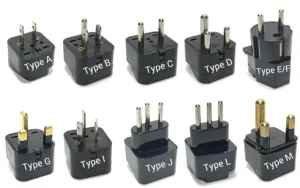
- Voltage: 230 volts
- Frequency: 50 Hz
- Plug Types: Type C (Europlug, two round pins) and Type F (Schuko, two round pins with earth clips).
Device Compatibility and Power Requirements
Common Cycling Electronics
Cyclists typically use smartphones, GPS navigation units, bike lights (front/rear), cycling computers, action cameras (GoPro, Insta360, etc.), power banks, electronic shifting systems (Shimano Di2, SRAM AXS), USB-rechargeable tools (tire inflators, multi-tools), and bluetooth accessories (heart rate monitors, sensors).
Necessary Adapters and Converters
Plug Adapters
- Type C and Type F plug adapters are required for travelers from countries using different plug types (e.g., US, UK, Australia).
- Universal adapters are recommended for multi-country trips.
Voltage Converters/Transformers
- Needed only if your device is single-voltage (e.g., 110V only).
- Most modern electronics are dual-voltage and do not require a converter, just a plug adapter.
- Converters are suitable for simple heating devices (hair dryers), while transformers are better for sensitive electronics (laptops, cameras).
- Always check your device’s input rating (e.g., “INPUT: 100-240V, 50/60Hz”) before plugging in.
Power Solutions Specific to Cycling
1. Power Banks (Portable Chargers)
- Essential for multi-day rides or remote areas with limited access to mains electricity.
- Recommended capacity: 10,000–20,000mAh for most cyclists; up to 27,000mAh for longer expeditions.
- Features to look for: USB-C Power Delivery, multiple ports, rugged/weatherproof design, pass-through charging.
- Top picks: Nitecore NB10000 Gen 3, Anker 733, INIU 20000 PD, Anker Prime 27650mAh.
2. Solar Panels
- Useful in Armenia’s sunny climate, especially for remote, off-grid travel.
- Recommended wattage: 10–20W for charging power banks and small devices.
- Best used as a supplement, pair with a power bank to store energy for use at night or in poor weather.
- Brands: Anker, Goal Zero.
3. Dynamo Hubs
- Generate power as you ride, providing continuous charging for lights and devices.
- Require a USB converter/rectifier (e.g., Sinewave Revolution, Cinq Plug6 Plus) to charge devices.
- Best for self-supported, long-distance, or remote touring where grid access is limited.
- Installation requires rebuilding the front wheel, plan ahead if considering this option.
4. Charging Strategies
- Charge at every opportunity: Guesthouses, cafés, and with local help.
- Use high-capacity power banks to bridge gaps between charging opportunities.
- Prioritize essential devices (phone, GPS, lights) and use offline maps to conserve battery.
- Prepare for power outages, keep devices topped up and don’t rely on grid power in rural areas.
Recommendations for Cycling Travelers in Armenia
- Bring at least one Type C or F plug adapter.
- Check all device chargers for 100–240V input compatibility.
- Carry a multi-port USB charger to charge several devices at once.
- Invest in a high-capacity, rugged power bank (10,000–20,000mAh minimum).
- Consider a solar panel for remote, sunny routes, but don’t rely on it as your only power source.
- Dynamo hubs are ideal for self-sufficiency on long or remote tours, especially when paired with a buffer battery or power bank.
- Charge devices at every opportunity and ask locals for help, Armenian hospitality is renowned.
- Prepare for stretches without electricity in remote areas. Always keep essential devices charged.
- Use frame bags or top tube bags with cable routing for secure, weather-protected charging setups.
- Keep devices and power banks out of direct sunlight in summer and close to your body in winter to maintain battery efficiency.
Compatibility with Armenian Power
- Most modern devices (phones, cameras, GPS, power banks) are charged via USB and come with chargers rated for 100–240V, 50/60Hz. These are fully compatible with Armenia’s 230V/50Hz system, only a plug adapter is needed.
- Direct AC devices (rare among cycling gear) that are single-voltage (e.g., 110V only) will require a voltage converter or transformer in addition to a plug adapter.
- Electronic shifting systems and most cycling computers use USB or proprietary chargers that are almost always dual-voltage.
- Dynamo hubs generate their own power and are independent of the local grid.
Currency Exchange
Currency Overview: The Armenian Dram (AMD)
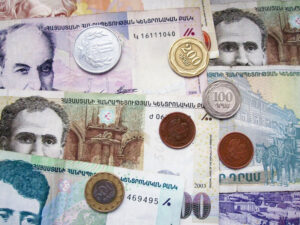
The official currency of Armenia is the Armenian dram (AMD), symbolized as ֏. Introduced in 1993 after Armenia gained independence from the Soviet Union, the dram is the sole legal tender in the country and is regulated by the Central Bank of Armenia. The dram is subdivided into 100 luma, though luma coins are rarely used in daily transactions.
Denominations
- Banknotes: 1,000, 2,000, 5,000, 10,000, 20,000, 50,000, and 100,000 AMD
- Coins: 10, 20, 50, 100, 200, and 500 AMD
Lower denomination notes (such as 50, 100, and 500 AMD) have been withdrawn from circulation.
Recent Exchange Rate (as of September 2025): 1 USD ≈ 382–400 AMD
Currency Exchange Options in Armenia
Armenia offers several reliable ways to exchange money, each with its own pros and cons. Here’s what you need to know:
1. Banks
- Safe and regulated; offer transparent rates.
- Operating hours: Typically 09:00–16:00 or 17:00; limited weekend service.
- ID required (passport or driver’s license).
- Rates: Competitive, but sometimes slightly less favorable than exchange offices.
- Note: Some banks only exchange for account holders.
2. Currency Exchange Offices (Bureaux de Change)
- Widespread in Yerevan and major cities; found in supermarkets, malls, and markets.
- Longer hours than banks, often open late.
- Rates: Usually the best, especially for USD and EUR.
- No commission at most offices.
- ID may be required for large transactions.
- Tip: Use reputable, well-located offices and avoid street changers.
3. ATMs
- Widely available in cities and towns; dispense AMD.
- Accept international cards (Visa, MasterCard, sometimes AmEx).
- Rates: Very competitive, close to interbank rates.
- Fees: Your home bank may charge foreign transaction/withdrawal fees; Armenian banks may charge a small local fee.
- Tip: Use ATMs attached to banks for better security.
4. Travel Money Cards
- Prepaid cards (e.g., Wise Multi-Currency Card) can be loaded with your home currency and used for purchases or ATM withdrawals.
- Rates: Mid-market rate with low, transparent fees.
- Safe and convenient; manage online or via app.
- Order in advance before your trip.
5. Airport Exchange
- Available at Zvartnots International Airport and other entry points.
- Rates: Less favorable; higher fees.
- Recommendation: Exchange only a small amount for immediate needs. Do the bulk of your exchange in the city.
Best Practices for Currency Exchange
- Use banks, official exchange offices, or ATMs, these are regulated and safe.
- Compare rates and fees using online tools like rate.am.
- Avoid exchanging money on the street or in markets to prevent scams and counterfeit notes.
- Bring your ID (passport or driver’s license) for exchanges.
- Count and inspect your money before leaving the counter; familiarize yourself with security features of dram notes.
- Request a receipt for every transaction.
- Use ATMs in well-lit, secure locations (preferably inside banks).
- Limit cash carrying, only take what you need for the day; use cards where possible in urban areas.
Safety Considerations for Cycling Travelers
- Crime is generally low in Armenia, but petty theft (pickpocketing, bag-snatching) can occur in urban areas and tourist hotspots.
- Split your money and cards between different locations (on your person, in bike bags, hidden pouch).
- Use a money belt or hidden pouch for the bulk of your cash and important documents.
- Carry only what you need for the day. Leave spare cash and valuables in a safe place at your accommodation.
- Be discreet when handling cash, especially in public.
- Lock your bike and take valuables with you when stopping in towns or cities.
- Use reputable taxi and ATM services. Avoid using public Wi-Fi for financial transactions.
Regional Considerations
Yerevan (Capital City)
- Best place for currency exchange, numerous banks, ATMs, and exchange offices.
- Credit cards widely accepted in high-end shops, restaurants, and hotels.
Regional Cities and Towns
- Banks and exchange offices available, but less densely than in Yerevan.
- ATMs present, but fewer and sometimes less reliable.
Rural Areas and Villages
- Currency exchange is rare or nonexistent; ATMs are scarce.
- Cash is essential, exchange enough money in advance and carry small denominations.
- Credit card acceptance is virtually nonexistent outside urban centers.
Airports and Tourist Sites
- Currency exchange available, but rates are less favorable.
- Exchange only the minimum necessary at the airport; do the rest in the city.
Recommendations for Cycling Travelers
- Always carry enough AMD cash (in small denominations) for several days, especially when heading into rural or remote areas.
- Withdraw cash in Yerevan or major cities before venturing out.
- Use ATMs attached to banks for better security and reliability.
- Stock up on food and essentials in larger towns, as small villages may have limited options.
- Be discreet and split your money to minimize risk.
- Accept local hospitality, Armenians are known for their generosity, which can sometimes offset costs.
- Plan for regional differences, fewer exchange options and ATMs in remote areas.
- Wild camping is legal and common, helping you save on accommodation and reduce the need for large amounts of cash.
Food & Water Quality
Food and Safety Landscape
Armenia has made significant progress in food safety, with a robust regulatory framework and active participation in international food safety initiatives. The Food Safety Inspectorate, Ministry of Economy, and Ministry of Health oversee food safety standards, inspections, and public health monitoring. Armenia’s food safety laws cover all stages of the food supply chain, and the country is recognized for aligning its standards with global recommendations.
However, foodborne illnesses still occur, particularly linked to home-made foods, lapses in food handling, and environmental factors such as flooding. Notable incidents in recent years include outbreaks of botulism from home-canned foods, salmonellosis, and food poisoning from bakery products and child care centers. These highlight the need for vigilance, especially with food from informal or unregulated sources.
Food Safety in Different Settings
Restaurants and Hotels
- Urban restaurants and hotels are generally subject to regular inspections and adhere to national and international food safety standards. Most reputable establishments in cities like Yerevan maintain good hygiene and food handling practices.
- High-end and international hotels often have additional internal standards and staff training.
Street Food and Informal Vendors
- Street food and informal vendors may pose higher risks due to less stringent oversight and variable hygiene practices. Food may be exposed to flies or prepared with limited access to clean water and sanitation.
- Rural areas may rely on traditional food preservation methods, which can increase the risk of foodborne illness, especially with home-canned products.
Markets and Retail Outlets
- Supermarkets and formal markets are regularly inspected for compliance with food safety regulations, including proper storage and labeling.
- Open-air markets can be more variable. While many vendors follow good practices, some may not, especially regarding refrigeration and food handling.
Food Processing and Manufacturing
- Food processing plants are subject to regular audits and must comply with hygiene, sanitation, and process control standards. Many companies have adopted ISO 22000 or similar food safety management systems.
Water Quality and Safety
Tap Water
- In Yerevan and major cities: Tap water is generally considered safe to drink, sourced mainly from high-quality groundwater and mountain springs. The water is regularly monitored and treated, and many locals drink it without issue.
- In rural areas: Water quality can be more variable due to infrastructure challenges and potential contamination from agriculture or industry. In some regions, water may be sourced from rivers or wells that are more exposed to pollutants.
- Radon: Some districts in Yerevan have higher radon levels in tap water, but the risk is low for average consumption. Letting the tap run for a few seconds before use can help reduce exposure.
Bottled Water
- Bottled water is widely available and affordable throughout Armenia, including in cities, towns, and tourist areas. It is the preferred choice for travelers, especially in rural or uncertain areas.
Waterborne Illnesses
- Parasites: Studies have found contamination of some raw water sources with parasites like Cryptosporidium and Giardia, which can cause gastrointestinal illness. This is more of a concern in rural or flood-affected areas.
- Flooding: Natural disasters, such as the 2024 floods in Lori and Tavush, have temporarily compromised water supplies, increasing the risk of waterborne diseases.
Safety Tips & Precautions for Travelers
Food Safety Tips
- Eat only well-cooked food: Avoid raw or undercooked meats, seafood, and eggs. Ensure food is served hot.
- Be cautious with dairy: Consume only pasteurized dairy products.
- Choose reputable restaurants: Favor established eateries and avoid street food or vendors with questionable hygiene.
- Wash fruits and vegetables: Eat only those you can peel yourself, and wash produce with safe water.
- Hand hygiene: Wash hands frequently with soap and water, or use hand sanitizer.
- Avoid home-canned foods: Botulism has been linked to home-made canned products. Do not consume home-canned foods unless you are certain of their safety.
- Be careful with food exposed to flies: Avoid food that has been left uncovered or exposed to insects.
Water Safety Tips
- Drink bottled or boiled water: Especially in rural areas or if you have a sensitive stomach. Always check that bottled water seals are intact.
- Avoid ice: Ice may be made from tap water, so it’s best to avoid it in drinks.
- Use safe water for brushing teeth: Use bottled or boiled water for oral hygiene.
- Hot drinks are generally safe: Tea and coffee are usually made with boiled water.
- Let tap water run: In areas with known radon issues, let the tap run for a few seconds before use.
Additional Health Precautions
- Vaccinations: Hepatitis A vaccination is recommended for most travelers, as the disease can be contracted through contaminated food or water.
- Travelers’ diarrhea: Carry oral rehydration salts and a basic travelers’ diarrhea kit. Over 70% of travelers may experience diarrhea.
- Be cautious with salads and unpeeled fruits: These may have been washed with tap water.
- Monitor local advisories: Stay informed about any temporary food or water safety issues, especially after heavy rains or in flood-affected areas.
What do the US Dept of State, US Embassy, and CDC say?
Check out the latest Travel Advisory to Armenia from the US Dept of State. Contacts from all US Embassies in Armenia are listed on the website. Use the Smart Traveler Enrollment Program (STEP) to inform them of your travels.
Read the Travel Health Notices & suggested vaccinations from the CDC
For the latest updates and resources, visit the U.S. Embassy in Armenia’s official website: U.S. Embassy & Consulates in Armenia
Supplement Your Health / Travel Insurance
General Insurance Requirements and Recommendations
Armenia does not require travel or health insurance for entry. However, it is strongly recommended for all travelers, especially those engaging in adventure activities like cycling.
- Medical Coverage: Armenia’s healthcare system, particularly outside Yerevan, may not meet Western standards. Emergency medical treatment and evacuation can be expensive, so ensure your policy covers these scenarios.
- Trip Protection: Look for insurance that covers trip cancellation, interruption, delay, baggage loss, and theft. This is especially important for cycling travelers who may face weather disruptions or gear issues.
- Adventure Activities: Not all standard travel insurance policies cover cycling, mountain biking, or other adventure sports. Confirm that your policy explicitly includes these activities.
- Pre-existing Conditions: If you have any, make sure your policy covers acute onset or recurrence while abroad.
- COVID-19 Coverage: Some plans offer coverage for COVID-19-related medical expenses and quarantine accommodation.
Specialized Insurance Options for Cyclists
Velosurance
- Who It’s For: U.S. residents traveling with their own bikes.
- Coverage: Theft, accidental damage, loss in transit (including airlines), liability, medical payments, and optional worldwide coverage (including Armenia).
- Key Features:
- No depreciation, reimbursement is based on the declared value of the bike.
- Optional add-ons for medical, liability, and uninsured motorist coverage.
- Worldwide coverage add-on is required for Armenia (adds 10% to annual premium).
- Claims can be filed from abroad; police report required for theft.
- Limitations: Only available to U.S. residents; not for commercial use.
- URL: velosurance.com
Sunday’s Insurance
- Who It’s For: U.S. residents (not available in New York) with bikes, including e-bikes.
- Coverage: Theft, accidental damage, vandalism, custom parts, accessories, and emergency medical expenses (up to $1,000 for cycling accidents).
- Key Features:
- Optional worldwide coverage add-on for up to 90 days abroad (covers Armenia).
- Covers loss, theft, and damage during international travel and transit.
- Optional racing/event coverage for competitive cyclists.
- Stranded cyclist support (transportation reimbursement if you can’t ride home after an accident).
- Limitations: Only emergency medical expenses are covered; separate travel medical insurance is recommended for broader health needs.
- URL: sundaysinsurance.com/
World Nomads Insurance
- Who It’s For: Residents of over 150 countries, including the U.S., seeking flexible, adventure-friendly travel insurance.
- Coverage: Emergency medical expenses, evacuation, trip cancellation, baggage and gear (including bikes), and a wide range of adventure sports (cycling, mountain biking, e-biking).
- Key Features:
- Multiple plan levels (Standard, Explorer, Epic, Annual) with varying benefit limits and activity coverage.
- Can be purchased before or during your trip.
- Online claims process and 24/7 emergency assistance.
- Explicit coverage for cycling and mountain biking; check plan details for competitive or extreme cycling.
- Limitations: Not all competitive or extreme cycling events may be covered; read policy details carefully.
- URL: worldnomads.com
Other Insurance Options for Cycling Travelers
1. SafetyWing
- Overview: Highly recommended for adventure travelers in Armenia, including cyclists. Offers medical, evacuation, trip interruption, and sports/activity coverage.
- Why Consider: Specifically recommended by local travel experts for Armenia’s rugged terrain and limited rural infrastructure.
- URL: safetywing.com
2. Auras
- Overview: Offers affordable travel insurance for cycle touring, including medical cover and COVID-19 protection. Policies are available for international travel and can be tailored for cycling trips in Armenia.
- URL: auras.insure
3. Mountain Biking Travel Insurance
- Overview: Dedicated policies for mountain biking, offering single trip, multi-trip, and annual coverage. Designed for worldwide travel and can be customized for cycling activities in Armenia.
- URL: sportscoverdirect.com
General International Providers
- Travelex, Allianz, InsureMyTrip: All offer plans that can be tailored for adventure travel and are highly rated for trips to Armenia.
- Comparison Tools: Use InsureMyTrip or Squaremouth to compare policies.
Key Considerations for Cycling Travelers
- Medical & Evacuation Coverage: Essential due to limited rural facilities and the risk of accidents in remote areas.
- Adventure Sports Inclusion: Confirm that cycling, mountain biking, or bikepacking are explicitly covered, as some insurers exclude these activities or require additional premiums .
- Bicycle & Gear Protection: Insure your bike and gear for theft, loss, or damage, especially if you’re bringing high-value equipment.
- Trip Disruption: Opt for policies that cover trip cancellation, interruption, and delay due to illness, weather, or other unforeseen events.
- Pre-existing Conditions: Disclose any pre-existing medical conditions and ensure coverage is included.
- Border Areas: Avoid travel near the borders with Azerbaijan and Turkey, as incidents in these areas may not be covered by insurance.
- Documentation: Keep receipts, police reports, and incident documentation to support any claims.
- Supplemental Health Insurance: If your bike insurance (e.g., Sunday’s) only covers emergency medical expenses, supplement with a comprehensive travel medical policy.
Armenia-Specific Insurance Providers
- No major Armenia-based insurers offer specialized cycling travel insurance for international visitors. International providers with global coverage are generally recommended.
- SafetyWing is the most Armenia-specific recommendation, with policies tailored for adventurous and nomadic travelers.
How to Stay Safe
Road Safety & Traffic Conditions
Armenia’s road safety environment presents both opportunities and challenges for cyclists:
Traffic Volume & Behavior
- Urban areas, especially Yerevan, have heavy traffic and aggressive driving habits. Drivers may not be accustomed to sharing the road with cyclists, and overtaking can be abrupt.
- Outside cities, traffic is lighter, but road quality can be inconsistent, with potholes and poor surfaces on secondary and rural roads.
- Main highways (“M” roads) are well-paved but busy and not ideal for cycling due to fast-moving vehicles and lack of cycling infrastructure.
Cycling Infrastructure:
- Dedicated cycling lanes are rare, and most cycling is done on regular roads shared with motor vehicles.
- Visibility can be poor on rural roads at night; lighting is limited.
Key Hazards
- Aggressive overtaking, especially on busy roads.
- Poor road surfaces, especially in mountainous or remote areas.
- Increased traffic near tourist destinations and on weekends.
- Limited signage and occasional livestock or stray animals on the road.
Best Practices
- Use quieter side roads and gravel trails where possible.
- Wear high-visibility clothing and use front/rear lights, especially in low-light conditions.
- Ride defensively and always be alert to the behavior of other road users.
Safety Equipment & Bicycle Maintenance
Proper equipment and maintenance are essential for safe cycling in Armenia:
Essential Safety Gear
- Helmet: Always wear a high-quality helmet.
- Protective Glasses: Shield your eyes from dust and debris.
- Gloves: Improve grip and protect hands in case of falls.
- Lights & Reflectors: Front and rear lights, plus reflectors, are crucial for visibility.
- Mirrors: Handlebar or helmet-mounted mirrors help monitor traffic behind you.
- Repair Kit: Carry tire levers, spare tubes, a pump, and a multi-tool for on-the-go repairs.
Advanced Accessories
- Knee/Elbow Pads: Especially for mountain biking or technical trails.
- Medical Alert Bracelet: For those with medical conditions.
Bicycle Maintenance
- Yerevan & Major Cities: Bike rental shops and repair services are available, often with safety gear included.
- Remote Areas: Bike shops are rare; self-sufficiency is crucial. Carry spare parts and know basic repairs.
- Guided Tours: Some operators provide support vehicles and mechanical assistance.
Health & Medical Precautions
- Healthcare Facilities:
- Yerevan has adequate public and private medical facilities; English is sometimes spoken.
- Outside the capital, facilities are basic and may lack English-speaking staff.
- Emergency Services: Dial 911 for ambulance services; English-speaking operators are available.
- Vaccinations & Health Risks:
- Ensure routine vaccinations are up to date (MMR, Tdap, influenza, polio).
- Recommended vaccines: Hepatitis A & B, rabies (for long-term travelers), meningitis.
- Be aware of risks such as leptospirosis (avoid swimming in freshwater), tick-borne diseases, and travelers’ diarrhea (use bottled or treated water).
- Altitude Sickness: Risk in high-altitude areas (e.g., Mount Aragats, Lake Sevan). Ascend gradually and stay hydrated.
- Medication: Bring necessary medications in original packaging, along with prescriptions. Some medicines may be hard to find locally.
- Travel Insurance: Comprehensive travel health insurance is strongly recommended, including coverage for medical evacuation.
Seasonal Considerations
Armenia’s climate is continental, with significant seasonal variation:
- Winter (Dec–Feb): Cold, snowy, and icy—cycling is challenging and often unsafe, especially in the mountains.
- Spring (Mar–May): Pleasant temperatures, but rain and muddy roads are common. Prepare for wet conditions.
- Summer (Jun–Aug): Hot and dry, especially in lowlands. Risk of dehydration and sunburn; carry extra water and use sun protection.
- Autumn (Sep–Nov): Mild and scenic, but rain increases in October/November. Shorter daylight hours.
Tips:
- Check weather forecasts before setting out.
- Adjust your gear and clothing to the season.
- Avoid cycling in remote or mountainous areas during winter
Cultural Awareness & Local Customs
Respect for Armenian culture enhances both safety and your travel experience:
- Road Behavior: Drivers and pedestrians may not strictly follow traffic rules. Always double-check before crossing.
- Dress & Behavior:
- Modest dress is appreciated, especially in rural or religious areas.
- Greet people politely and show courtesy, particularly in villages.
- Gender Sensitivities: Traditional gender roles are more pronounced in rural areas. Female cyclists may wish to dress conservatively and may attract attention when traveling alone.
- Religious Sites:
- Show respect by removing hats, speaking quietly, and following posted guidelines.
- Ask permission before photographing people or private property.
- Hospitality: Armenians are known for their hospitality; you may be invited for tea or a meal. Accept graciously, but remain cautious and respectful.
Crime Prevention & Personal Safety
Armenia is generally safe, but standard precautions are necessary:
- Crime Rate: Low overall. Violent crime is rare. Petty theft (pickpocketing, bag-snatching) can occur in crowded areas and on public transport.
- Scams: Be wary of unsolicited help, especially near ATMs or in bars. Internet scams are also reported.
- Border Areas: Avoid travel within 5 km of the eastern border with Azerbaijan due to military activity and landmines.
- Women & LGBTQ+ Travelers:
- Solo female travelers may experience occasional harassment; remain cautious, especially at night.
- Armenia is conservative regarding LGBTQ+ issues; public displays of affection may attract attention.
- Practical Tips:
- Keep valuables and passports secure; carry copies rather than originals when possible.
- Use ATMs in well-lit, public areas or inside banks.
- Avoid isolated areas at night and inform someone of your route.
Insurance & Legal Considerations
- Insurance Requirements:
- No compulsory insurance for cyclists in Armenia.
- Strongly recommended: comprehensive travel insurance covering medical emergencies, accidents, and evacuation.
- Optional: personal accident or third-party liability insurance for extra protection.
- Legal Regulations:
- Cyclists must follow general road safety laws (obey traffic signals, ride on the correct side, use designated paths where available).
- For e-bikes and electric scooters, users must be at least 18 (or 16+ with a license) and follow specific rules.
- Insurance Purchase: Obtain insurance from licensed Armenian or international providers before your trip.
Practical Safety Tips for Cyclists
- Route Planning:
- Use quieter roads and avoid main highways where possible.
- Download offline maps and have a GPS device for navigation.
- Equipment:
- Carry a comprehensive repair kit and know basic bike maintenance.
- Bring enough water and snacks, especially for remote areas.
- Visibility: Wear bright clothing and use lights at all times, especially in tunnels or low-light conditions.
- Group Travel:
- Travel with others in remote or mountainous regions when possible.
- Inform someone of your planned route and expected arrival times.
- Emergency Preparedness:
- Save local emergency numbers (911 for ambulance, 102 for police).
- Know the location of the nearest medical facilities.
- Flexibility: Be ready to adjust plans due to weather, road closures, or unexpected challenges.
- Local Advice: Trust local recommendations for safe routes and current conditions.
Essential Apps
Navigation & Mapping Apps
Komoot
- Why: Best for planning and navigating cycling routes, with detailed elevation, surface info, and offline maps. Highly recommended for Armenia’s varied terrain.
- Android | iOS
Mapy.cz
- Why: Excellent topographic detail, offline maps, and reliable cycling route suggestions, especially for remote or mountainous areas.
- Android | iOS
Bikemap
- Why: Large database of user-generated cycling routes in Armenia, with route planning, tracking, and offline support (premium).
- Android | iOS
Maps.me
- Why: Fully offline maps with cycling mode, useful for basic navigation and finding POIs in areas with limited connectivity.
- Android | iOS
Ride with GPS
- Why: Advanced route planning, navigation, and ride analysis, with offline maps and device sync.
- Android | iOS
🚴♂️ Cycling-Specific & Local Apps
Strava
- Why: Track your rides, discover popular segments, and connect with the global cycling community. Useful for route discovery via heatmaps.
- Android | iOS
Velopark
YerevanRide
🌦️ Weather Apps
Armenia Weather App
- Why: Localized forecasts for 60+ Armenian cities, offline support, and multi-language interface.
- Android
AccuWeather
Yandex Weather
🗣️ Translation & Language Apps
Google Translate
- Why: Best overall for Armenian, with text, voice, and camera translation, plus offline support.
- Android | iOS
iTranslate
- Why: Supports Armenian, with voice and text translation, phrasebook, and offline mode (premium).
- Android | iOS
Microsoft Translator
🚨 Emergency & Safety Apps
AlertTraveler®
- Why: Real-time safety alerts, country/city intelligence, and instant check-in for emergencies.
- Android | iOS
GeoSure
EchoSOS
🚕 Local Transportation & Accommodation Apps
GG Taxi
Yandex Go
Visit Yerevan
HIKEArmenia

Cycle The Myth: Peloponnese, Greece
From$2,600Availability : July 30 - Aug 15, 2025Delhi, Manali to Leh, IndiaExperience the bustling chaos and historic majesty of Delhi’s ancient streets before embarking on one of the world’s most epicView TourGolden Triangle + Himalayan Cycling Adventure
From$2,600Availability : July 30 - Aug 15, 2025Delhi, Manali to Leh, IndiaExperience the bustling chaos and historic majesty of Delhi’s ancient streets before embarking on one of the world’s most epicView Tour
Kerala Spice Trail Cycling Tour
From$1,750Availability : January 15 - 25, 2026Kerala, IndiaKerala, aka “God’s Own Country”, is known for stunning landscapes, serene backwaters, vibrant culture, & diverse cycling routes through tropicalView Tour

E-Bike Travel in 2026: Best Destinations, Laws & What No One Tells You
Let me say this upfront: E-bike travel in 2026 is...
Read More
The 2026 Guide to Planning Stress-Free Group Cycling Trips (Clubs & Friends Edition)
How to turn group ride chaos into an AI-powered, purpose-driven,...
Read More
2026: The Breakout Year for Cycling Travelers (Routes, Visas, Bridges & Billions Invested)
Imagine a year where the world is actually reshaping itself...
Read More